Glendale parkways look simple until you try to improve one. That narrow strip between the curb and sidewalk can become a polished extension of the front yard, a water-wise planting bed, or a persistent code problem if the work starts without the right permit. For homeowners planning landscaping Glendale CA projects, the parkway deserves special attention because it sits in a public-facing zone with private maintenance expectations, city visibility, pedestrian use, street trees, utilities, and water restrictions all meeting in one tight space.
A good landscape Landscape community guide contractor Glendale homeowners can trust will treat the parkway differently from a backyard landscaping project. In the backyard, the main questions tend to be privacy, drainage, entertainment, plant selection, and long-term maintenance. In the parkway, the questions become more precise. Is a permit required? Does the material exceed the city’s height threshold? Will the design interfere with safe movement? Does irrigation overspray into the street? Does the planting support Glendale’s water conservation goals? Those details matter, especially in a city that has clear rules for parkway landscaping and a hot, dry Southern California climate.
The City of Glendale requires a permit from Public Works for installing any living or non-living plant materials over 12 inches high in parkways. Parkway landscaping is governed by Glendale Municipal Code Chapter 12.48. That one sentence should guide the entire design process. If a homeowner wants to replace tired grass with drought tolerant landscaping, add native plants, install decorative rock, reshape a front yard landscaping plan, or coordinate a parkway with a broader landscape renovation, the work should begin with a clear understanding of the permit requirement.
Why the parkway is not just another planting bed
A parkway is highly visible, but it is also constrained. It needs to look intentional from the street, feel compatible with the house, and perform under difficult growing conditions. It receives reflected heat from pavement, foot traffic near the curb, occasional door swing from parked vehicles, and less forgiving irrigation access than a private bed inside the property line. In Glendale, the water side of the equation is even more important because outdoor watering is limited under Phase III of the Mandatory Water Conservation Ordinance.
Glendale Water & Power’s current Phase III rules limit outdoor watering to two days a week, Tuesday and Saturday, for no more than 10 minutes per watering station. That is not a generous irrigation schedule for thirsty plant material. It is a practical reminder that any successful parkway landscape installation needs to be designed around water efficiency from the start, not corrected after the plants decline.
This is where experience makes a visible difference. A landscaper Glendale CA homeowners hire for parkway work should not simply choose plants that glendale landscape contractors look good in nursery containers. The contractor should understand how small plants establish, how mulch protects soil moisture, why drip irrigation works better than spray in narrow strips, and how to avoid creating a maintenance burden that the homeowner resents after the first summer.
Parkways also influence curb appeal. Glendale’s residential architecture gives landscapers a lot to respond to. In neighborhoods with Spanish Colonial Revival, Craftsman, Tudor Revival, French-inspired, and other historic character homes, the landscape should support the building rather than compete with it. The city’s own design guidance asks whether landscape design complements building design and conserves water. That is a useful standard for homeowners too. A parkway does not need to be ornate. It needs to look appropriate, durable, and cared for.
The 12-inch rule and why it changes the design conversation
The city’s parkway permit trigger is straightforward: installing any living or non-living plant materials over 12 inches high in parkways requires a permit from Public Works. Homeowners sometimes underestimate that language because they focus only on plants. The phrase includes living and non-living materials. In practical terms, a contractor should evaluate shrubs, grasses, accents, boulders, decorative elements, and other proposed features through that height lens before work begins.
The important word is “installing.” If the plan includes new material over 12 inches high, the permit requirement needs to be addressed before the installation. A responsible landscape contractor Glendale residents rely on will not treat the permit as an afterthought or a formality to handle if someone complains. Parkway work is visible by nature. Inspectors, neighbors, and utility crews can all see it. The safest professional approach is to design with the rule in mind and coordinate with Public Works when the project calls for it.
The 12-inch threshold also affects plant maturity. A young plant may be under 12 inches at installation but grow well above that height later. The verified city requirement refers to installing materials over 12 inches high, so the immediate permit trigger concerns the installed condition. Still, good design should account for mature size because parkways are not good places for plants that quickly become overgrown, block movement, or require constant shearing. Low maintenance landscaping is not just a marketing phrase here. It is the difference between a parkway that matures gracefully and one that needs monthly correction.
A common mistake is choosing compact shrubs that look tidy in a one-gallon container, then planting them too close together in a narrow strip. Within two or three growing seasons, the homeowner is forced to prune them into hard little blocks to keep the sidewalk and curb clear. That kind of maintenance can make even a well-intended drought tolerant landscaping plan look harsh. Better spacing, better species selection, and a realistic view of mature height usually produce a cleaner result.
What Public Works review means for homeowners
The permit requirement should not be viewed as a punishment. It is a control point for work in a public-adjacent space. The parkway sits between private curb appeal and public function. A permit process gives the city a way to review proposed materials and help prevent conflicts before they are built into the landscape.
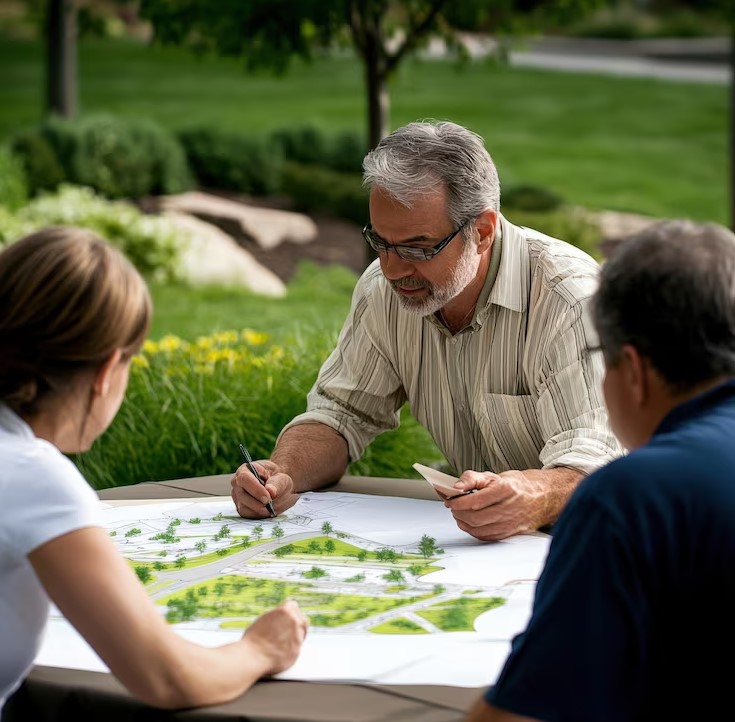
Homeowners planning residential landscaping often start with aesthetics: “I want the front to feel finished,” or “I want to remove the grass,” or “I want something that matches the new paver patio and entry walk.” Those goals are valid, but a parkway needs another layer of review. The best approach is to prepare a simple, legible plan showing what will be installed, where it will go, and how it will be irrigated or maintained. The plan does not need to be theatrical to be useful. It needs to be clear.
For a custom landscape design that includes both private front yard landscaping and parkway improvements, the contractor should separate the parkway scope from the rest of the property on the plan. That makes it easier to identify which elements may need Public Works review. If the private yard includes retaining walls, hardscaping, a paver patio, patio installation, outdoor living spaces, or major irrigation systems, those items may raise other design and construction questions. The parkway permit question remains its own issue and should not be lost in the larger project.
A practical permit-ready parkway plan usually benefits from these basics:
A measured sketch showing the curb, sidewalk, property frontage, and proposed planting or non-living materials. Plant names, approximate installed sizes, and expected mature heights. Notes on irrigation method, especially if drip irrigation or efficient irrigation will be used. Mulch, rock, or groundcover areas clearly labeled. Any material over 12 inches high identified before submittal or installation.That is one of the few places where a list helps because missing one of those items can delay the conversation. The point is not to overcomplicate a small project. The point is to prevent ambiguity. A contractor who can explain the plan in plain language usually saves the homeowner time.
Designing for Glendale’s water rules, not against them
The most successful parkway projects in Glendale start with water reality. Phase III watering limits allow outdoor watering only Tuesday and Saturday, no more than 10 minutes per watering station. That schedule favors well-designed irrigation systems, properly grouped plants, mulch, and careful establishment practices. It works against overspray, thirsty turf, mismatched plant zones, and quick cosmetic fixes.
Glendale actively promotes drought-tolerant and California-friendly landscaping. The city maintains a downtown drought-tolerant demonstration garden and also points residents toward water-wise garden examples with more than 200 examples of California native landscapes. That public emphasis reflects the practical conditions homeowners face. A green lawn can use a large amount of water in summer, while native plants can survive drought with far less water once properly established. Glendale has stated the contrast clearly: native plants can survive drought with about 20 gallons of water per month, compared with up to 4,000 gallons per month for a green lawn in summer.
That comparison should shape parkway decisions. Turf in a parkway is often inefficient because the strip is narrow and bordered by pavement. Sprinkler installation in such a confined area can easily spray the sidewalk or street if it is not designed carefully. Spray drift wastes water, stains pavement, and can make sidewalks slippery. Drip irrigation, mulch, and drought tolerant plants usually make better sense.
For homeowners considering sod installation, the parkway is rarely the first place I would recommend it under Glendale’s conservation framework. Sod can still have a role in some private yard designs where usable lawn is truly needed, but a narrow parkway does not offer much usable space. It mostly offers appearance. If appearance can be achieved with native plants, California-friendly plantings, and water efficient landscaping, the trade-off favors a lower-water approach.
Artificial turf and synthetic grass require careful thinking too. Glendale’s Turf Replacement Program offers a rebate for replacing turf with drought-tolerant or native plants, drip or efficient irrigation, and rainwater capture, but synthetic turf is not an approved conversion option in that program. That does not mean every use of artificial turf in every location is addressed by the rebate rule, but it does mean homeowners should not assume synthetic grass will qualify for turf replacement incentives. A landscape contractor should explain that distinction early, before the budget depends on a rebate that will not apply.
Parkway planting that fits Glendale homes
Good landscape design in Glendale often begins with the house. A Spanish Colonial Revival home can look natural with restrained, warm-toned hardscaping, simple masses of drought tolerant plants, and a clean relationship between the entry and street. A Craftsman home may call for a softer, more layered planting style, still water-wise but less formal. Tudor Revival and French-inspired homes can handle structure, but the parkway should not become a miniature hedge maze that fights the architecture.
The Rossmoyne Historic District alone includes 503 homes and is known for architecture such as Spanish Colonial Revival, Tudor Revival, and French-inspired styles. Glendale also has many Craftsman and Spanish Colonial Revival homes. That architectural context matters because the landscape is part of the front-facing composition. In high-value housing markets, curb appeal is not a superficial concern. Glendale’s median value of owner-occupied housing units is over $1 million, and well-designed outdoor spaces can influence how a property is perceived from the street.
A parkway should not be the loudest part of the property. It should set the tone. If the front yard has a low stucco wall, a tiled stair, or a mature tree canopy, the parkway can echo those lines with low plant masses and compatible textures. If the house has a modest facade, the landscape can add depth without overwhelming it. The best front yard landscaping feels edited. It has enough variety to avoid looking flat, but not so much that maintenance becomes a constant chore.
Native plants are often a strong fit, especially when the design respects mature size and seasonal character. Some homeowners want year-round symmetry and dense green growth, while many California-friendly plants have seasonal bloom cycles, seed heads, or dormancy patterns. A professional landscaper should talk through that honestly. Drought tolerant landscaping does not always behave like traditional ornamental planting. It can be more dynamic and, when designed well, more locally appropriate.
Irrigation details that separate good work from expensive maintenance
Parkway irrigation is a small part of the job by square footage, but it can create outsized problems. Overspray onto sidewalks and streets wastes water and undermines the entire purpose of water efficient landscaping. Poor coverage leaves plants stressed, which leads homeowners to overwater. A broken line in a narrow strip may go unnoticed until runoff appears at the curb.
Glendale’s landscape guidance emphasizes drip irrigation, mulch, leak repairs, and watering early or late in the day. Those recommendations are practical. Drip irrigation delivers water near the root zone and reduces waste compared with spray heads in narrow areas. Mulch helps slow landscapers Glendale CA evaporation and moderates soil temperature. Leak repairs matter because even a small leak can waste water continuously, while the homeowner assumes the landscape simply needs more irrigation.
A good landscape installation will group plants with similar water needs. Mixing thirsty annual color with drought tolerant native plants in the same parkway creates a maintenance conflict. One group will be overwatered or the other will be underwatered. Either way, the result disappoints. If a homeowner wants seasonal color, it may be better placed in containers or private beds where irrigation can be managed separately.
Sprinkler installation may still appear in broader residential landscaping, but the parkway usually rewards drip. If spray is used anywhere near the sidewalk, heads must be selected and adjusted carefully. The two-day watering rule and 10-minute station limit leave little room for inefficient coverage. The system needs to make every minute count.

Hardscape in the parkway: attractive, but not automatically simple
Hardscaping can make a parkway cleaner and more walkable when used carefully. Stepping areas near car doors, decomposed granite-style surfaces, decorative rock, or paver accents can reduce wear and help the landscape survive real use. The challenge is that non-living materials over 12 inches high also fall under the permit language when installed in parkways. Even when height is not an issue, hardscape choices should be made with heat, access, and maintenance in mind.
A hardscape contractor who is used to backyard patios may need to adjust their thinking for parkway work. A paver patio in a backyard is designed for furniture, gatherings, drainage, and long-term settlement. A parkway surface must relate to curbside access, pedestrian movement, and the public edge of the property. Materials that look handsome in a private courtyard can feel awkward in a narrow strip if they create tripping concerns, collect debris, or make maintenance harder.
Retaining walls deserve particular caution. Homeowners sometimes want a raised parkway edge to frame planting, but height, location, and public interface make that a more sensitive decision than a low planting bed inside the yard. Since Glendale’s parkway rules include non-living materials over 12 inches high, walls or raised features in the parkway should be discussed before installation. Even outside the parkway, retaining walls should be designed with drainage and stability in mind. A landscape contractor should know when a wall is more than a decorative feature and needs additional professional review.
The same judgment applies to boulders and large accents. A few stones can anchor a drought tolerant design. Too many can make the strip look cluttered, trap trash, or complicate plant care. Scale matters. In a parkway, restraint almost always ages better than excess.
Turf replacement and rebate planning
Glendale’s Turf Replacement Program is an important opportunity for homeowners who want to replace turf with a more water-wise landscape. The program offers $3 per square foot for replacing turf with drought-tolerant or native plants, drip or efficient irrigation, and rainwater capture. Synthetic turf is not an approved conversion option in that program. For homeowners comparing naturalistic xeriscaping, artificial turf, and low-water planting, that rebate rule can change the financial picture.
A contractor should discuss rebate compatibility before demolition. If the existing parkway or front yard includes turf and the homeowner hopes to apply for the program, the design needs to align with program requirements. Removing lawn first and asking questions later can create unnecessary disappointment. Rebate programs typically require homeowners to follow specific procedures, and while details can change, the safest practice is to confirm requirements before work begins.
Xeriscaping does not mean bare gravel. In Glendale, a strong xeriscape can include native plants, California-friendly shrubs, mulch, efficient irrigation, and rainwater capture features where appropriate. The best examples feel alive, not stripped down. They use foliage texture, spacing, bloom timing, and ground plane materials to create a composed landscape that needs less water than lawn.
The parkway can be a useful first phase of a larger landscape renovation. A homeowner may not be ready to redesign the entire front yard, but replacing a thirsty strip with drought tolerant planting can reduce maintenance and improve the street view. If the budget allows, coordinating the parkway with the front yard produces a more cohesive result. Matching mulch, repeating plant species, and aligning the entry path with the street edge can make a modest project look professionally planned.
Maintenance rules and the leaf blower issue
A parkway landscape lives in public view, so maintenance practices matter. Glendale has a gas-powered leaf blower prohibition, and Glendale Water & Power offers rebates for electric leaf blowers purchased in Glendale or elsewhere. For homeowners and maintenance crews, this affects day-to-day landscape care. A water-wise parkway can still look neglected if leaves, seed pods, and debris collect along the curb and sidewalk. The solution is not louder equipment. It is a maintenance plan that fits the city’s rules and the landscape’s materials.
Mulch is excellent for moisture retention, but lightweight mulch can migrate during cleanup if a blower is used aggressively. Rock mulch stays put more easily but can trap fine debris and heat up. Planting density affects cleanup too. Dense low plantings can suppress weeds and shade soil, but they also catch litter. Open spacing looks tidy early on but may invite weeds until plants fill in. These are not reasons to avoid water-wise landscaping. They are reasons to design with maintenance in mind.
A practical parkway maintenance plan should cover watering checks, mulch depth, weed control, seasonal pruning, and irrigation leaks. It should also respect mature plant form. Constantly shearing drought tolerant plants into tight shapes often shortens their useful life and increases green waste. Selective pruning usually looks better and supports healthier growth.
Common mistakes that delay or damage parkway projects
Most parkway problems come from rushing. The strip is small, so homeowners assume it can be handled casually. A crew removes turf, installs plants and rock, and only later does someone ask whether a permit was required. Or the design starts with a photo from another city, ignoring Glendale’s water rules and permit threshold. Or a homeowner chooses synthetic grass expecting a turf replacement rebate, then learns it is not an approved conversion option for that program.
The most preventable mistakes are easy to name:
Installing plants or non-living materials over 12 inches high in the parkway without addressing the Public Works permit requirement. Designing around spray irrigation in a narrow strip where drip irrigation would reduce waste. Choosing plant material for its nursery appearance rather than mature height, spread, and water needs. Assuming artificial turf qualifies for Glendale’s turf replacement rebate. Treating the parkway as separate from the home’s architecture and broader front yard landscaping.Those mistakes are common because they are understandable. Homeowners want visible improvement, and a parkway feels manageable. The professional responsibility of a landscape contractor is to slow the process just enough to protect the client from rework, fines, wasted water, and disappointing growth.
How a contractor should approach a Glendale parkway consultation
A thorough consultation for parkway landscaping should begin on the sidewalk, not at the kitchen table. The contractor should look at the curb, sidewalk width, existing irrigation, slope, sun exposure, nearby trees, and how people actually move from parked cars to the house. They should note whether the parkway is currently turf, bare soil, existing planting, or hardscape. They should ask whether the homeowner wants to pursue the turf replacement rebate if turf is present.
From there, the design discussion can move into style and budget. A modest low maintenance landscaping plan may focus on native plants, mulch, and drip conversion. A more comprehensive custom landscape design may connect the parkway to a new front walk, entry planting, lighting plan, and backyard landscaping improvements. If the project also includes outdoor living spaces, patio installation, a paver patio, or other hardscaping, the contractor should still keep the parkway permit issue distinct.
The most valuable contractors are direct about trade-offs. Native and drought tolerant plants can save water, but they still need establishment care. Drip systems are efficient, but they must be checked because leaks or clogged emitters are not always obvious. Rock mulch can look clean, but too much stone may increase heat. Dense planting can look lush, but only if mature sizes are respected. A professional opinion is not just a design preference. It is a prediction about how the landscape will behave in Glendale’s climate under Glendale’s rules.
Matching water conservation with curb appeal
Some homeowners worry that water efficient landscaping means sacrificing curb appeal. In practice, the opposite is often true. A struggling lawn in a narrow parkway rarely improves a property. Brown edges, sprinkler overspray, and uneven patches draw attention for the wrong reasons. A composed drought tolerant design can look cleaner, more intentional, and more suitable to Southern California.
The key is proportion. Low plants near the curb, slightly taller accents where allowed and permitted, repeated textures, and a simple ground plane usually work better than a scattered collection of individual specimens. The parkway should read as one designed element. If the front yard has a stronger planting composition behind the sidewalk, the parkway can be quieter. If the private front yard is minimal, the parkway can carry more visual interest while still staying practical.
Color should be residential landscape contractors used with discipline. Flowering native plants and California-friendly species can bring seasonal character, but the design should not depend entirely on bloom. Foliage color, leaf size, plant shape, and mulch tone carry the landscape through the rest of the year. In Glendale’s hot, dry conditions, the best curb appeal often comes from plants that look comfortable where they are planted.
When to rethink the entire front yard, not just the parkway
Sometimes a parkway project exposes larger issues. If the existing irrigation system is inefficient, the lawn is failing, the entry path feels disconnected, or the planting style clashes with the house, replacing the parkway alone may not deliver the result the homeowner wants. A broader landscape renovation can solve those problems in one coordinated effort.
Front yard landscaping and parkway landscaping should share a vocabulary. That does not mean every plant must repeat, but the design should feel related. Mulch, plant spacing, hardscape color, and irrigation strategy should make sense across the property line. If the homeowner plans future work, the parkway should be designed as phase one of that larger vision. That avoids tearing out new work later when the front yard is redesigned.
Backyard landscaping is different because it often serves private life. Outdoor living spaces, dining patios, play areas, and shade structures are about use. The front yard and parkway are about arrival, architecture, water responsibility, and neighborhood presence. A skilled contractor knows how to design for both without making them feel disconnected.
A permit-aware parkway is a better long-term investment
Glendale homeowners work within a specific set of realities: hot dry weather, mandatory water conservation, strong city support for drought tolerant and California-friendly landscaping, a clear parkway permit trigger for living or non-living materials over 12 inches high, and neighborhoods where architecture and curb appeal carry real value. None of those realities prevent a beautiful landscape. They simply require better planning.
The right landscape contractor Glendale homeowners choose should bring more than labor and plant knowledge. They should understand the permit threshold, design for limited watering days, recommend efficient irrigation systems, respect the home’s architecture, and explain rebate limitations honestly. They should also know when simplicity is the more professional choice.
A well-designed parkway will not call attention to its compliance. It will simply look right. The plants will fit the space. The irrigation will avoid waste. The materials will feel appropriate to the house. The maintenance will be manageable. The homeowner will not have to wonder whether the work should have been permitted after the fact.
That is the real value of professional parkway landscaping in Glendale. It turns a narrow, regulated strip into a durable part of the home’s first impression, one that respects city requirements, conserves water, and still gives the property a finished, cared-for edge.